



















Undeniably, it is iconic to stage a play about the suffragette movement on the Royal Albert Hall stage, known to them as ‘The Temple of Liberty’. It was 1908 when the Suffragettes first met at the hall, inviting the then Liberal Chancellor of the Exchequer to meet with the Women’s Liberal Federation. His commitment to votes for women was doubted. He was heckled and the next day the headlines read “Suffragettes Riot in Albert Hall”.
Evidently, the British media has always had a flare for sensationalism. In April 1913 the suffragettes were banned from the Hall, after other notable milestones in the movement; the attempted storming of the Houses of Parliament in March 1907, and Marion Wallace Dunlop’s Hunger strike of July 1909. The ban was not lifted untuil1918.
The Olivier-nominated production Sylvia. A Musical Revolution ends its tour on this iconic stage, with Beverely Knight playing the formidable Emmeline Pankhurst alongside Naomi Katiyo’s equally formidable, Sylvia Pankhurst. It was quite the ride. Let us get one critical point out of the way. Most of the first half of the show there were distracting sound issues; the music seemed too loud.
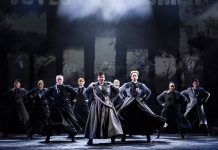
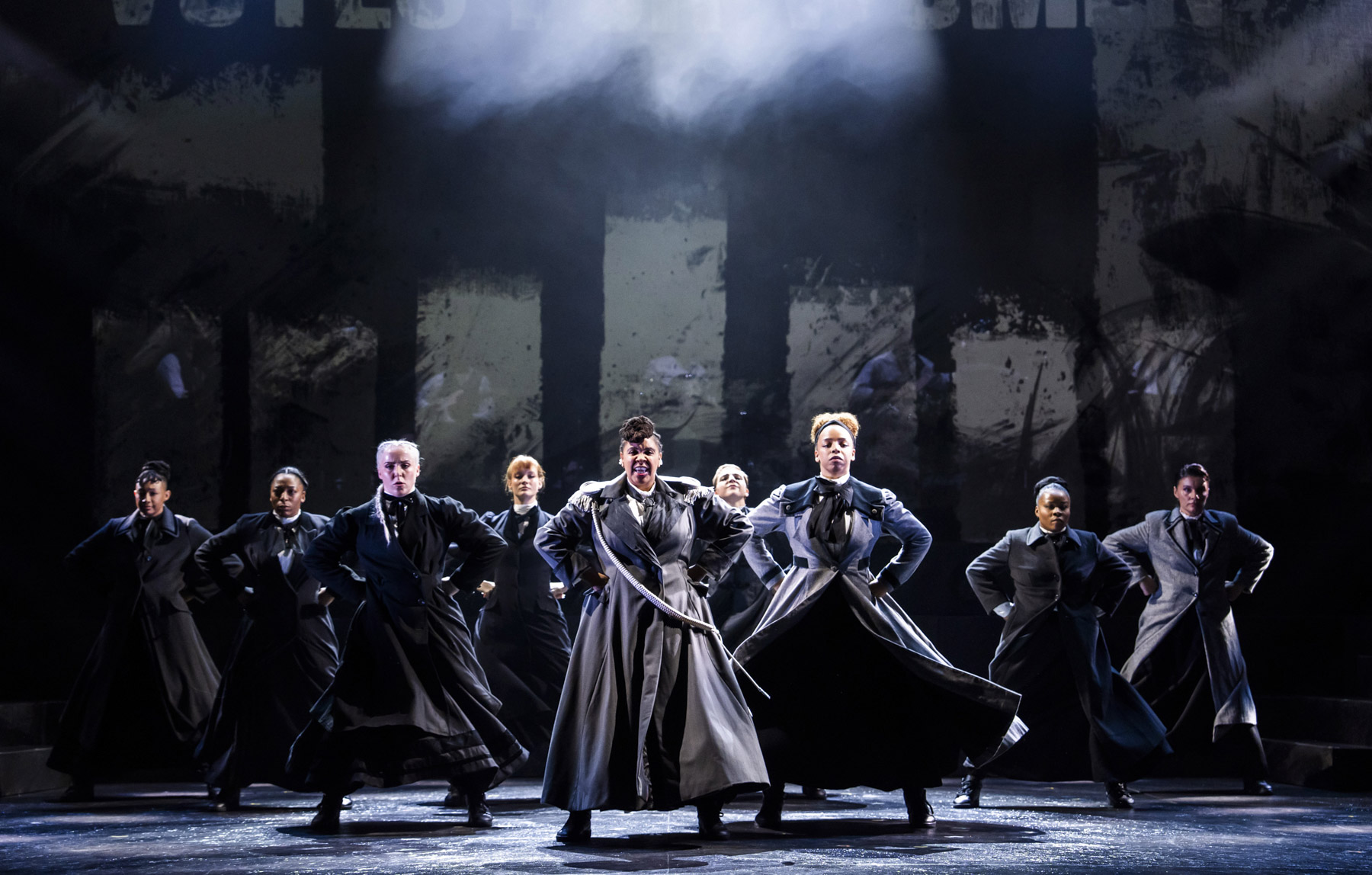
It was hard to understand what was being sung, like the auditorium was swallowing up these powerhouse voices, which was shame. Saying this, the earnest, rhythm and energy of the cast could not be faulted. That radiated from the very first song, First Steps, and carried throughout to standout songs March Women March, Women are Stronger and Don’t Let me Down, regardless. The rap battle of the latter centres something fundamental, the core societal and home brewed tension between the male view of women and their roles, the rampant misogyny and pseudo-scientific basis for their nonsense (in this instance manifested by The National League for Opposing Women’s Suffrage.) and women countering with, well, everything we know to be true of the duality of ‘a woman’s work’, their right to autonomy, political and otherwise and the right to be free.
This lyric from Sylvia sums it up for me. “We are yours for the taking. You choose the where and when and who came up this bright idea, hmm, men”.
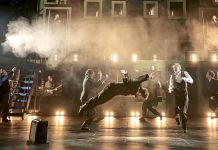
Amongst the varied styles Kate Prince uses in both lyrics and choreography, she pulls no punches narratively. There is a rousing scene where the women are arm in arm, against the physical backdrop of a line of men with batons. They buckle, recoil against blows we do not see, and they bring each other back, to stand together, repeatedly, in the face of the state sanctioned violence. Black Friday demonstration. 1910. Look it up. This was an incredibly moving scene, and I felt what must have been pride or gratefulness for what they endured, for us.
The musical also centres the other beating heart of the show, feminism itself, which women exactly was the fight for votes for? Alongside the tension between fighting for equality for all vs fighting for equality for a few, as a means to an end, a tension which endures to this day. This focus on the differing motivations of women, its impact on the evolving movement and its devastating effect on personal relationships, (not least between mother and daughter) was confronted and was compelling.
It could have been swept over and sanitised and I am glad it was not. Naomi Katiyo brought a consistent emotional depth, growth, resilience as Sylvia. That was the standout performance of the evening, underscoring both this more intimate of struggles, and its political manifestation. I preferred when the show was serious, rather than comical and whilst the show felt like a feat of endurance at times, the struggle for the vote was, and the storytelling carries and personalises the weight of that struggle well.
I found myself thinking of Lin Manuel Miranda’s Hamilton a few times throughout. However, as a modern musical take on a historical struggle, perhaps the comparison is inevitable but Sylvia, is distinctly its own thing. Even before the moment I saw Churchill’s mother (Kenedy Small, as Jennie Churchill) boggling to a banging garage track, there was no denying this is a unique and British rooted story that is more than the sum of its parts.
NEED TO KNOW: Sylvia the Musical plays at the Royal Albert Hall until 15 Nov 2026
RELATED LINKS: