











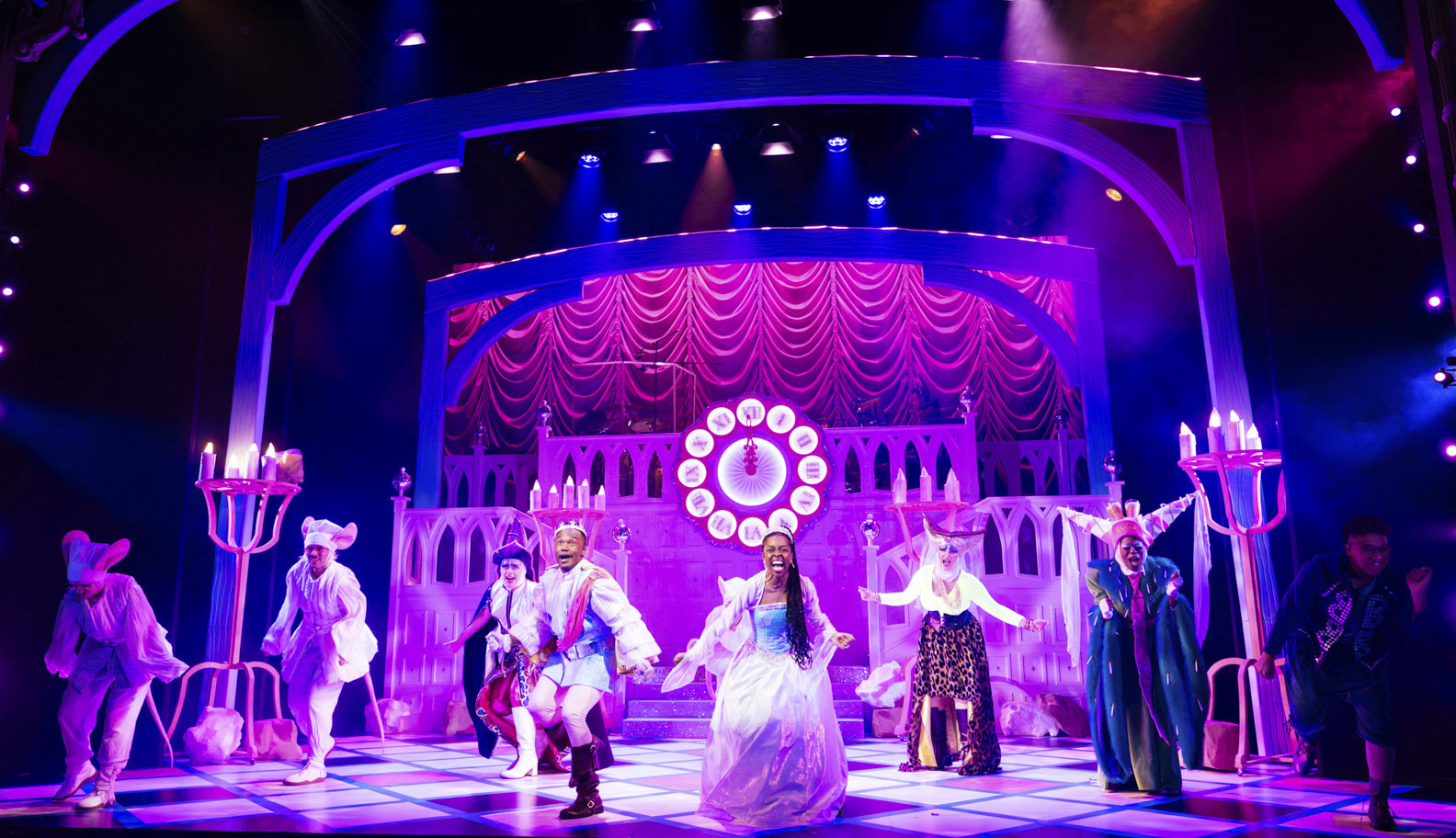
Pantomime is not my favourite theatrical form, but the Lyric Hammersmith’s Cinderella written by Joel Horwood was a wonderful surprise. Clever, gloriously camp and politically irreverent, it knows exactly what it is doing. Beneath the ridiculousness is a thoughtful exploration of motherhood, care and what it means to be worthy of love.
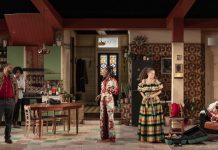
Contemporary retellings of Cinderella tend to resolve the fairytale’s uncomfortable gender politics by making their heroine more explicitly Girl Power! This production takes a more interesting approach. Chrissie Bhima’s Cinderella is sweet, awkward, prone to whining and fairly clueless, born with, quite literally, two left feet. Durone Stokes’s Prince Charming is equally goofy, tender and uncertain, with little conventional masculine authority. Their compatibility emerges through mirrored gestures, matching pink outfits and a wonderfully absurd Wicked-inspired dance at the ball. Neither needs to become more impressive to deserve affection; they simply match each other’s energy.
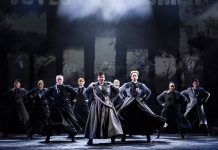
Donna Berlin’s magnificently monstrous stepmother, Suella Kemi Nigel Rupert Donald Da Grinch (yes, quite), gloats over an economic model dependent on extracting finite resources, xenophobia and war. Labour’s failure to capitalise on its parliamentary majority is pilloried too. A narcissist for the age, Suella humiliates her children and terrorises anyone crossing her path. Her entrances bring thunder, lightning and a mwa-ha-ha deserving of its own billing. Berlin is fabulous with wordplay: during one particularly vicious read, her delivery takes on a hint of Jamaican Patois, and I half expected her to finish with “low-budget vagina, Cinderella”. Mind you, I’d take that mews house over Castle Brexit any day.
Her hapless daughters appear to have been raised entirely online. In a largely colour-blind cast, the contrast is pointed: the Black leads speak in familiar fairytale cadences, doffing their caps to iambic pentameter and archaic phrasing, while the White stepsisters, who extract endless labour from Cinderella, communicate through catchphrases appropriated from Black British English, AAVE and Black queer vernacular. Their relentless delivery becomes a joke in itself, exposing the absurdity of chronically online culture vultures who appropriate Black linguistic ingenuity as generic Gen Z internet slang, divorcing it from its cultural significance and the work of those who created it.
The production’s most compelling choice is its treatment of motherhood. Cinderella’s deceased mother is more than a narrative convenience: her dress, kindness, relationships and hopes for her daughter continue to shape events. Even the fairy godmother’s intervention stems from a kindness she once extended. Ashh Blackwood’s Buttons, Cinderella’s best friend and a fairy-in-training, encourages, challenges and exasperatedly pushes her towards recognising her worth. Rather than simply telling Cinderella she deserves better, Buttons helps her imagine what that means and find the courage to act. Their relationship is the story’s emotional centre. Suella is the grotesque counterpoint, pursuing the prince herself rather than securing her daughters’ future. Motherhood here is practised through care, guidance and cultivating another person’s possibilities.
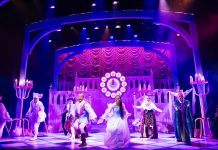
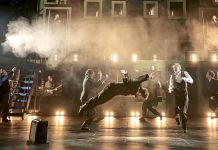
The performances are as entertaining as the writing. Bhima may have two left feet, but her voice is another matter. Her rendition of All by Myself slips a perfectly timed “mice and elf” pun into one refrain. Colin Burnicle’s Scouse fairy godmother, in Dame Edna glasses, a vast ballgown and an enormous, rigid blue-and-white cloud-shaped headpiece, brings eighties New York ballroom to Glamoursmith. The three ensemble mice twerk through proceedings, doubling convincingly as horses, partygoers and members of the press. They are the party.
The centrepiece is Cinderella’s transformation. The exaggerated skirt of the fairy godmother’s sparkling gown catches the disco ball’s light; Dave the pumpkin, googly eyes and all, frolics dementedly in the background. Suddenly Cinders is spinning like a top as the chords of Alicia Keys’ Girl on Fire build, the audience joining in with the “oh-ohhhhh-o-o-o”, until the chorus belts out and she transforms. Magic.
Asides about sexual performance and strap-ons sail over younger heads while keeping grown-ups in stitches. My six-year-old was completely rapt, repeatedly leaping up to warn characters of impending disaster, especially when the prince seemed destined to marry Suella through a prosthetic-leg deception. The adults beside us enjoyed his increasingly desperate interventions almost as much as the show. His verdict: “no boring bits, excellent songs and the bottom-wiggling mice were the undisputed stars”.
Perfectly judged, intentional chaos for the entire family, delivered with spectacularly queer earnestness. To reclaim the language appropriated by the stepsisters, this Cinderella is, in every way, mother.
NEED TO KNOW: Cinderella plays at the Lyric Hammersmith until 3 Jan 2027