


















Picture a pleasant summer evening with a diverse audience, exuberant chatter fills the air, as hungry eyes eagerly await performances from Carlos Acosta’s Cuban Dance Academy graduates, Acosta Danza Yunior.
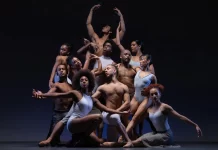
Susana Pous’s Fuga opened the proceedings. Five bodies in form-fitting shorts; some in leotards and others bare-chested, strewn on a central grass square – reminiscent of Kylie Minogue’s ‘Slow’ video. A white orb suspended above, reflecting shards of moonlight.
Conveying the tragic consequences of migration, my eyes were consumed with Images of yearning, longing, being set adrift and waiting to be rescued. Dancers formed net-like formations that were dismantled, frayed, and reassembled. Bodies tumbling, falling and being caught. Waves of movement – expansive yet contained by the physical border.
Languid duets of pain, solace and compassion dissolved, leaving a soloist marooned on the island. The performers were not only technically precise, but also emotive, fearless and striking.
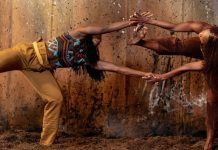
The second offering was an exquisite duet by Didy Veldman. Situated in a red rectangle of light, sometimes flickering and intense, other times golden and brilliant. The protagonists were enthralled with each other, sharing in play and exploration of each other’s essence.
The dancers find each other again and again – often animalistic and primal in the execution of their movement. Veldman showcased not only eloquent, expressive, and intricate partnering but also expertly demonstrated the conversation between the dancers, encouraging the audience to engage fully with the rich work.
I would have loved the music to be originally composed, as the renowned track used has had a big life of its own, and this piece deserves a fresher sonic world.
Kudos to the charismatic, magnetic and flawless dancers.
Capriccio, choreographed by Kit Holder, highlighted standout dancers who began floor-bound in unison, attached with a white piece of material covering their heads.
This beautiful piece was gesturally sweeping and expansive in its vocabulary and was visually and aurally arresting to witness.
The dancers’ passion, commitment and drive were highlighted in their lyricism and rapport with the space, music and each other.
The decision to use minimal lighting and scenography served to propel the sublime dancers, who carved through the space, leaving traces of excellence in their wake.
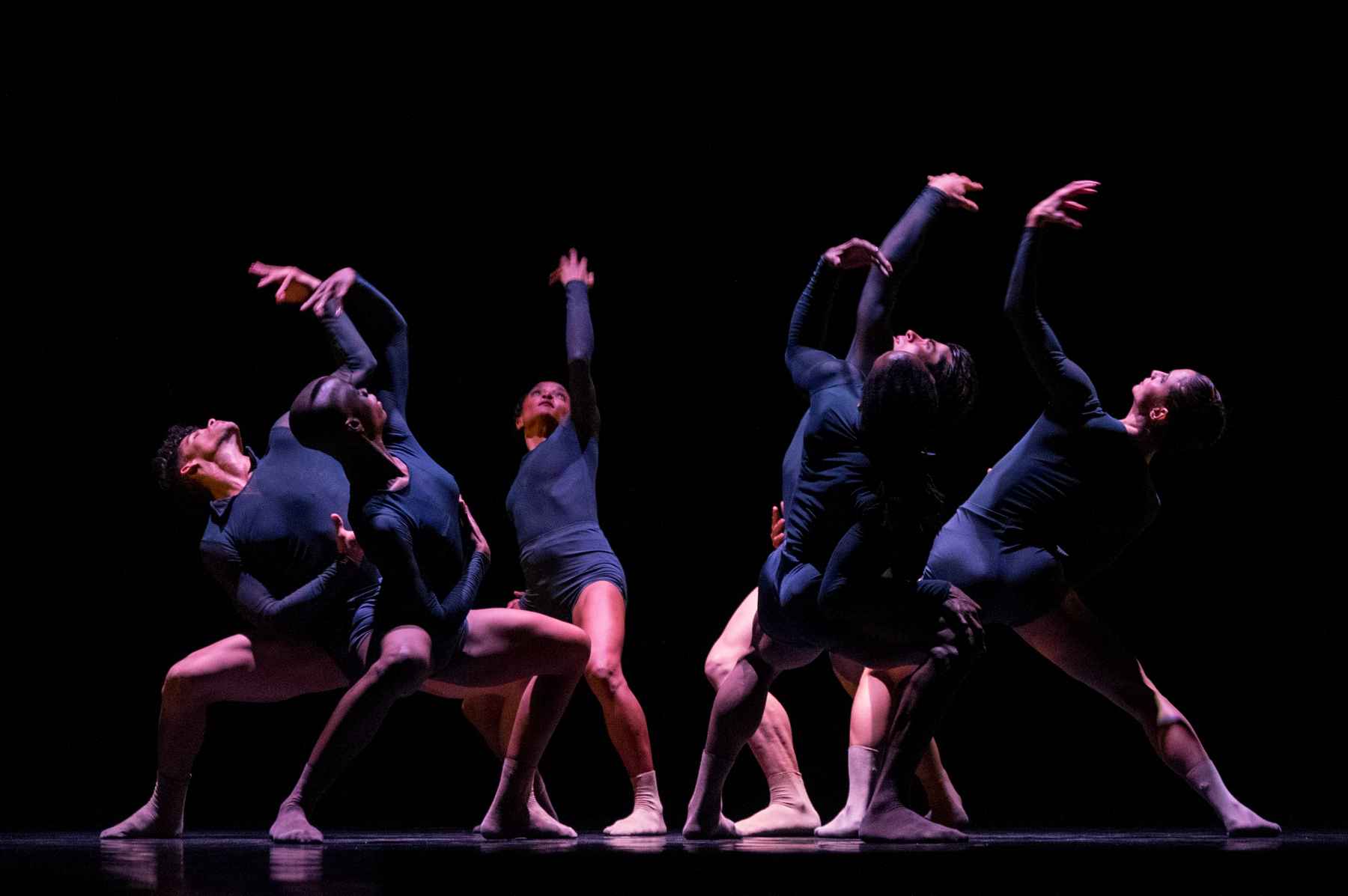
Juliano Nunes’s Mundo Interpretado presented six superbly accomplished dancers adorned in blue leotards and yellow socks, water lilies hanging on wires, above their heads. The piece began percussively in unison, earthy and explosive. Like creatures dominating the ecology they survey.
The striking sextet transitioned into a tender trio, using the language of spirals and circles to convey the spiritual connection we have with the water and landscape we inhabit.
Serene blue lighting reflected the imagery of the piece and framed elemental duets, which continued the motif of blossoming flowers and soulful waves.
Blue turns to red and the energy intensifies – an impactful duet filled with fiery dynamism, sharp intakes of breath, desire and manipulation takes centre stage.
Nunes’ work ended unexpectedly and was less coherent – an albeit well-danced pas de deux en pointe took me out of a very physical and organic world and into a twee balletic one.
The programme relied too heavily on the use of the ‘split’. Although I may come across as a bitter bystander, the repetition of this virtuosic device is often distracting and not always necessary.
Acosta Danza Yunior has produced elite talent, and the next generation of dancers is safe in their hands. Bravo to cast, creative team and choreographers for their captivating evening of work.
Need to know
Acosta Danza Yunior plays at Sadler’s Wells East until 20 June 2026.