




















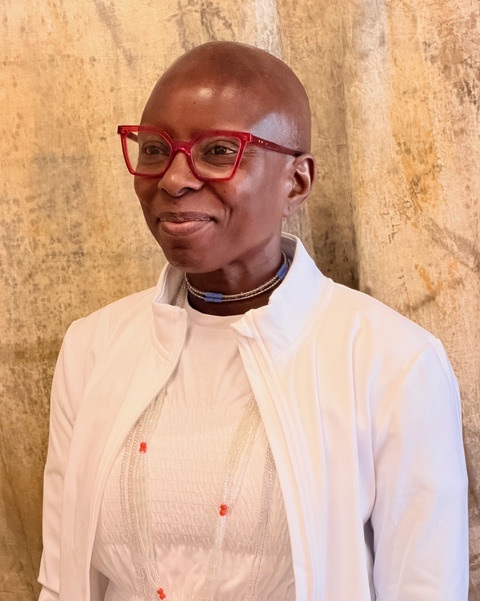
Dr Mojisola Kareem, artistic director, Utopia Theatre, on Professor Wole Soyinka and his “quiet” 1958 play The Swamp Dwellers.
I have always been fascinated by Soyinka as an artist. Reading through his collection of plays over the years, The Swamp Dwellers has always intrigued me. There is something about it that speaks to me deeply. The atmosphere, humour and spirituality of the play drew me in. On the surface, it appears deceptively simple, but underneath it asks profound questions about survival, faith, migration, family and what happens to communities when the world around them begins to shift.
For me, that is why the play feels so urgent now. Soyinka wrote this play when he was just 24 years old. He is now 91. What strikes me is how little has changed. Almost everything he was writing about is still happening somewhere in the world today. Young people still leave home believing the city will solve everything, only to find disappointment and disillusionment. Communities are still being fractured by poverty, environmental damage and lack of opportunity. People are still being exploited by false spiritual and political leaders. Land continues to be damaged by powerful interests while those with the least power carry the consequences.
The play feels incredibly contemporary because it touches on issues we are grappling with globally: migration and the search for a better life, climate anxiety, inequality, economic desperation, environmental collapse, fractured communities and the tension between tradition and modernity.
The swamp itself is not just a setting. It becomes a force pressing in on the lives of the characters, shaping their choices, fears and sense of possibility. In that sense, the play speaks clearly to environmental injustice and the story of the Niger Delta, where communities continue to live with the consequences of extraction and exploitation. It speaks to what happens when people are trapped between staying in a place that no longer sustains them and leaving for a city that may also fail them.
The play also explores the illusion of the urban dream. Young people leave home hoping for prosperity, only to realise that the city can also be unforgiving, exploitative and isolating. Equally, the play asks uncomfortable questions about spiritual and institutional hypocrisy through figures who exploit vulnerability and desperation for personal gain. Again, these themes feel painfully familiar today.
I think The Swamp Dwellers has been staged less frequently than some of Soyinka’s other plays because it is deceptive. Not a great deal appears to happen on the surface, and we live in a world increasingly driven by spectacle, immediacy and entertainment. This is a play that asks audiences to listen, think and sit with uncertainty. It also sits in the shadow of Soyinka’s better-known works, such as Death and the King’s Horseman and The Lion and the Jewel, which perhaps makes it easier to overlook. But for me, this is one of his most quietly powerful plays.
In some ways, it reminds me of Waiting for Godot, particularly in its themes of waiting, uncertainty and lives suspended. But The Swamp Dwellers is grounded in a very real and recognisable world. It is about poverty, migration, faith, disappointment and survival. It feels deeply human.
Our production will remain mostly faithful to the text. I am not interested in imposing an artificial contemporary framing because the relevance is already there. The aim is to bring audiences close to the world of the play so they feel almost as though they are in the Niger Delta, on the edge of the swamp, living inside the pressures of that environment. Given the scale of our venue (50 capacity), it will be an intimate encounter with the story.
What I hope audiences leave with is a question: why has so little changed? Why are the same struggles still playing out across the world? Why are people still forced to leave home in search of survival? Who gets left behind? Who profits from people’s desperation? And what does it mean to remain human when the systems around us fail?

Related links
- Soyinka’s forgotten play The Swamp Dwellers receives Sheffield revival after over half a century
- Crown of Blood – review
- First Look at Utopia Theatre’s Crown of Blood at Sheffield Theatres
- Oladipo Agboluaje – interview
- Kehinde Bankole (Oyebisi) and Deyemi Okanlawon (Aderemi) – interviews
- Death and The King’s Horseman by Wole Soyinka – review
- MEET THE FULL CAST OF DEATH AND THE KING’S HORSEMAN
- Mojiso la Kareem – interview