



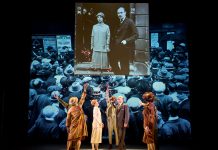













In the summer of 1984 and the miners’ strike was being crushed by Margaret Thatcher‘s government, while in London, the gay community is being afflicted by a disease the government refused to name. Two communities that could not have been more distant from each other, and yet somehow destined to be united. Mark Ashton, a gay communist, brings those two groups together by founding Lesbians and Gays Support the Miners (LGSM), a London-based group that raised funds for the miners, who, during the strikes, were living on scraps. Both groups were fighting for survival: the miners facing destitution, the gay community confronting a lethal epidemic that the establishment preferred to ignore.
Matthew Warchus, who directed the original 2014 film Pride and is the current Artistic Director of the Old Vic, directs this world premiere musical adaptation at the National Theatre’s Dorfman with the same warmth and precision he brought to Matilda the Musical. The Dorfman is the right house for this show: intimate enough to catch every detail, large enough to hold a full company and the full weight of this story. Partnering again with Stephen Beresford, who writes book and lyrics, the two have deepened the story they first told on screen into something the musical form alone can achieve.
Alongside them, composers Christopher Nightingale, Josh Cohen and DJ Walde have crafted an original score rooted in protest anthems, pop, rock, disco and the Welsh choral tradition, bringing another dimension to a cast that rises to every demand it makes of them. As Beresford has noted in interviews, this is a story of joy and sadness in equal measure, and the score and text honours both without flinching from either.
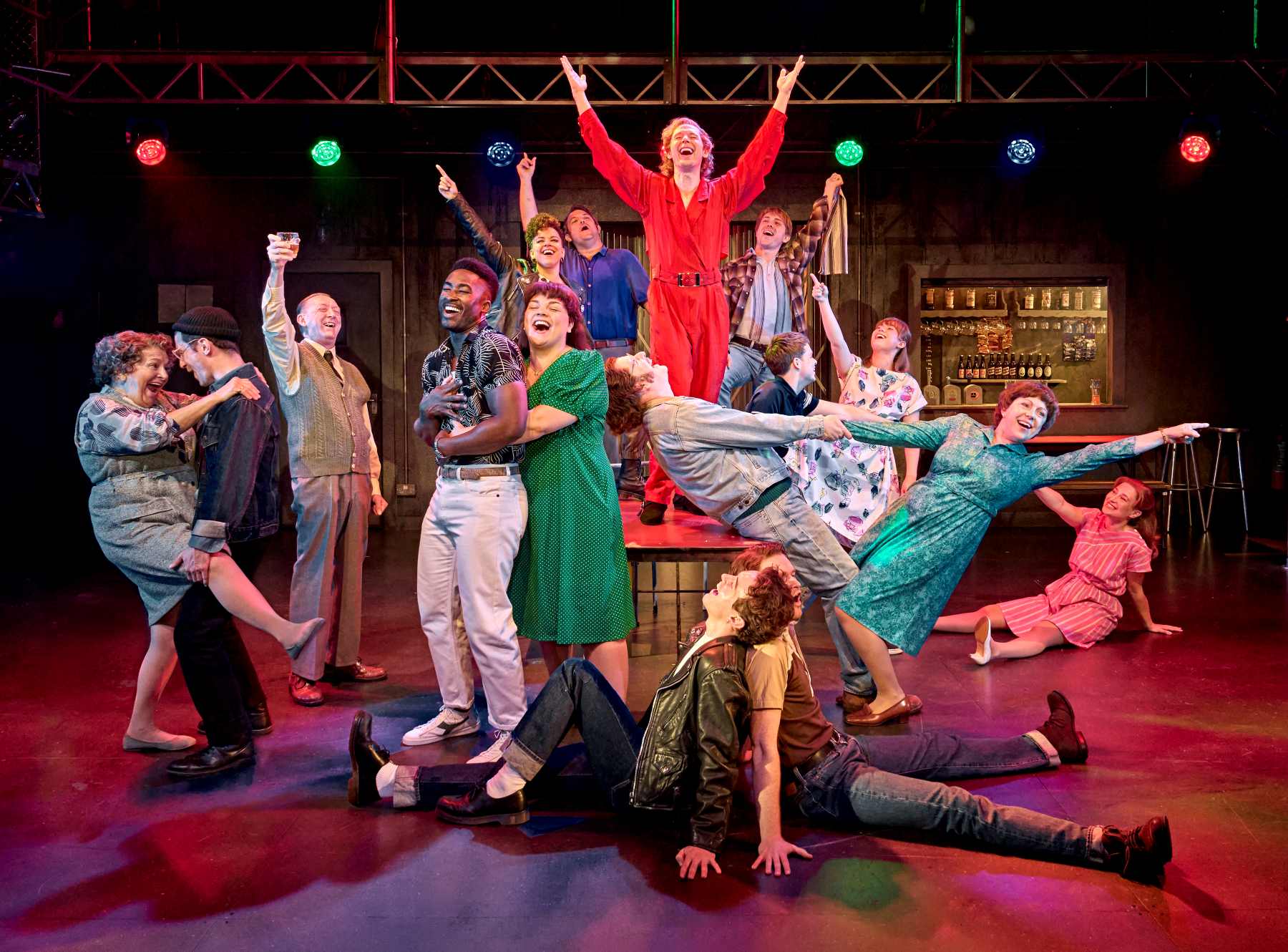
With a cast this large it would be easy for individuals to be swallowed by the ensemble, but that never happens here. It was a delight to see the seasoned Gillian Elisa as Gwen, who brings so much detail and joy to this production. Lewis Cornay as Bromley carries the awkwardness and naivety of youth with complete conviction: his inner life is visible from his very first moment on stage, a young man perpetually on the edge of saying the thing he cannot yet say. Jhon Lumsden’s Mark Ashton burns with the conviction of someone who cannot imagine standing still while injustice continues. That quality feels as urgent in 2026 as it did in 1984.
This show is one of those made by collective voices, which is entirely appropriate given its themes. There is so much detail and inner life in every member of the cast that it was difficult to look away from any of them. Each performer on that stage had mannerisms, gestures and expressions that made them a fully realised individual. While you could see the ensemble moving in sync, you could also see the person within. Brilliant work. It is genuinely difficult to single out anyone.
There were several memorable moments. The opening of the second act belongs entirely to Samuel Barnett, whose Jonathan, one of the first people in Britain to be diagnosed with AIDS, delivers a number that moves from quiet devastation to full sequinned defiance. In the space of five minutes Barnett proves himself a triple threat, and left us more than glad to have returned for the second half. Then there is the moment Cornay‘s Bromley finally confronts his family: in an outburst of emotion he reveals he is gay, and she knew all along.
The tenderness and release of that scene land all the harder for everything Cornay has been quietly carrying since the beginning. Another moment worth mentioning, with genuine historical resonance, is when Sarah Pugh‘s Siân James reveals she wants to be more than a mother and a wife. Her song and her emotions truly come to life in that scene. Later it is revealed she became the MP for Swansea East, and in a break of the fourth wall her character’s reaction to that news is one of the loveliest unexpected moments of the evening.
A fine balance between intense historical themes and heartwarming comedy, Pride is a well-crafted production that knows exactly when to move you and when to make you laugh. By the time the final number arrived and the full company was gathered, there was not a face in the house, on either side of the footlights, that was not on the verge of tears. A powerful and joyful tribute to the real people who made this history, and a reminder of why solidarity never goes out of fashion.
NEED TO KNOW: Pride is at the National Theatre until 12 Sep 2026. The show is currently sold out, but returns are available through the National Theatre website. Friday Rush tickets are also released each week for those willing to move quickly.