












The Unlikely Pilgrimage of Harold Fry at the Theatre Royal Haymarket is a delightfully gentle musical that carries considerable emotional weight. Adapted by Rachel Joyce from her 2012 novel and enriched by the atmospheric, folk‑infused songs of singer‑songwriter Passenger, this story of an ageing man’s impulsive 500‑mile trek across England unfolds as a gruelling and deeply moving odyssey.
Harold Fry (Mark Addy) is a retired brewery worker living in muted routine with his equally restrained wife, Maureen (Jenna Russell), in rural Devon. Their days are shaped by habit and silence, their marriage marked by the careful avoidance of old wounds. When Harold receives a letter from Queenie, a former colleague now dying in a hospice in Berwick‑upon‑Tweed, a dormant spark is struck. He drafts a brief reply and sets out to post it.
What begins as a simple stroll to the local post box quickly becomes something far larger. Encouraged by a young garage cashier who shares a story about how her aunt’s belief helped her battle cancer, Harold experiences a moment of profound clarity. Realising that merely posting a letter is inadequate, he impulsively decides to walk the entire length of the country to deliver his message in person.
Without proper footwear, preparation or even a clear plan, he simply keeps walking, driven by the conviction that his pilgrimage might somehow keep Queenie alive. What unfolds is not merely a cross‑country trek but a journey through memory, regret, grief and the fragile possibility of redemption, as each mile becomes a blend of physical trial and emotional excavation.
At the centre of this production is a performance of striking vulnerability from Mark Addy. As Harold, he captures the physical and emotional toll of the journey with aching precision. He doesn’t sing a great deal, and when he does, it isn’t with the powerhouse intensity often expected of musical leads. Instead, his delivery is understated rather than soaring, conversational rather than melodramatic, which gives his performance greater emotional depth and integrity. As the miles accumulate, so too does our understanding of the man. The figure who first appears as an inconsequential retiree slowly gathers emotional gravity, until the unremarkable becomes quietly heroic. By the end, Harold is not transformed into something grander, but something deeper.
Like Harold, Maureen Fry is on a journey, though hers is an inward one. While he navigates motorways and muddy footpaths, she is left to confront the difficult terrain of memory and suppressed emotion. Jenna Russell ensures that this quieter pilgrimage is no less compelling. Her performance captures a woman with a tough exterior beneath which lie long‑buried grief and unresolved resentment. As the story unfolds, Russell allows her character’s rigidity to soften, revealing a more vulnerable side. Her solo numbers, sung with emotional clarity rather than melodrama, are among the production’s most affecting moments.
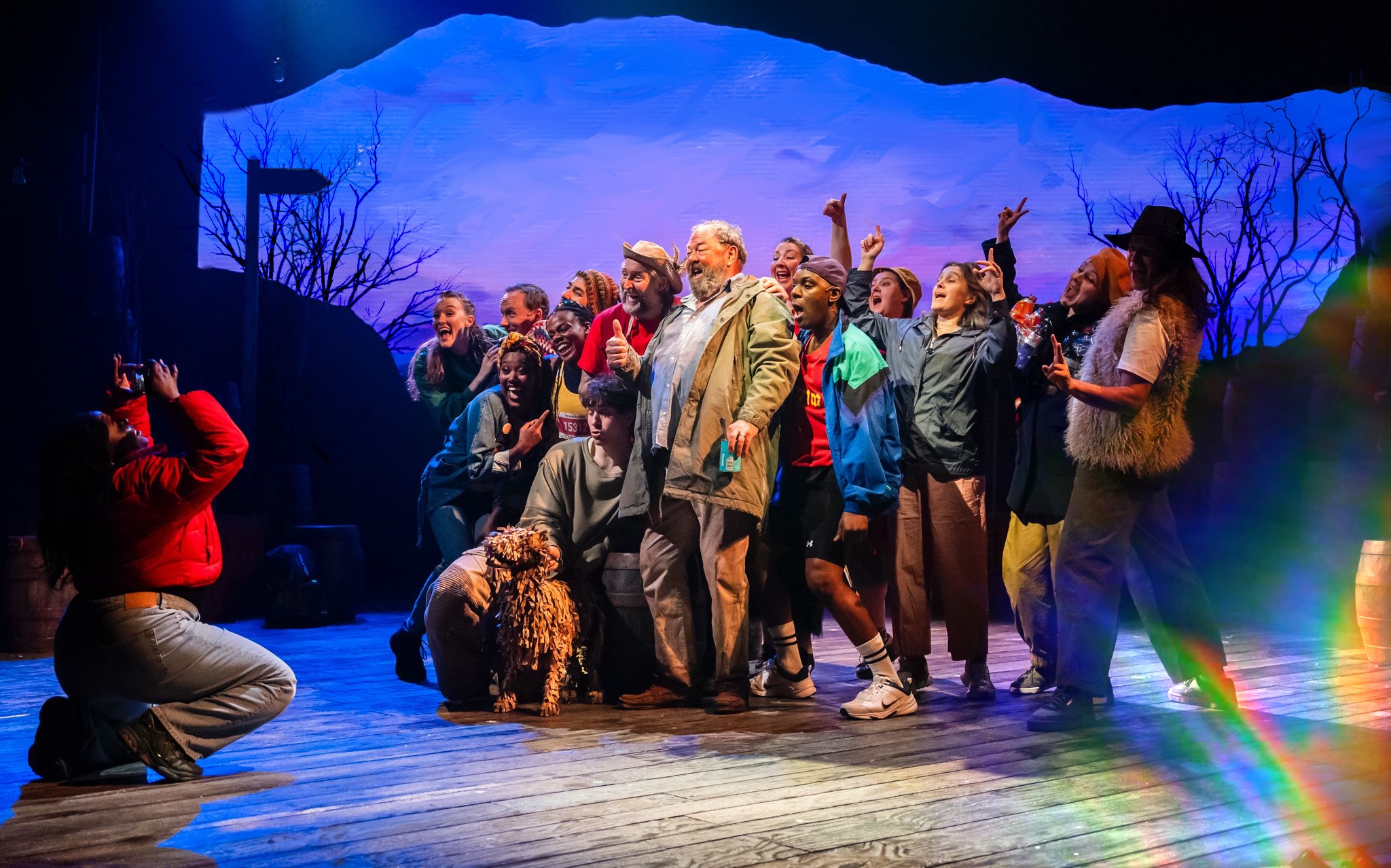
The supporting cast operates as a fluid ensemble, morphing between the eccentric strangers Harold encounters and the figures who populate his memories. Noah Russell is particularly striking, shifting with deft subtlety from balladeer‑narrator to Harold’s son, David, lending both roles a quiet poignancy. As the garage assistant whose easy optimism first nudges Harold towards his improbable trek, Nicole Nyarambi brings warmth and unaffected sincerity. Meanwhile, the inventive puppetry by Timo Tatzber gives the stray dog Harold befriends a vivid stage presence. Together with the rest of the ensemble, they sustain the production’s momentum, ensuring that each of Harold’s encounters feels meaningful.
Director Katy Rudd and choreographer Tom Jackson Greaves handle the story with great skill. Walking is not, in itself, the most visually dynamic activity, but Rudd’s staging gives every step purpose. Moments of humour and activity are counterbalanced with stretches of stillness and reflection that give the piece real emotional breathing space. Passenger’s music is a defining element: the folk‑inspired songs range from tender ballads to rousing, gospel‑tinged numbers, all well integrated into the action.
The Unlikely Pilgrimage of Harold Fry is a triumph of emotional storytelling over theatrical spectacle. Its power lies in its restraint, its finely observed performances, its uncluttered narrative and a score that prioritises sincerity over bombast. The result is a play that moves gently but lands deeply. However far you walk to see this play, your journey will be rewarded.