


















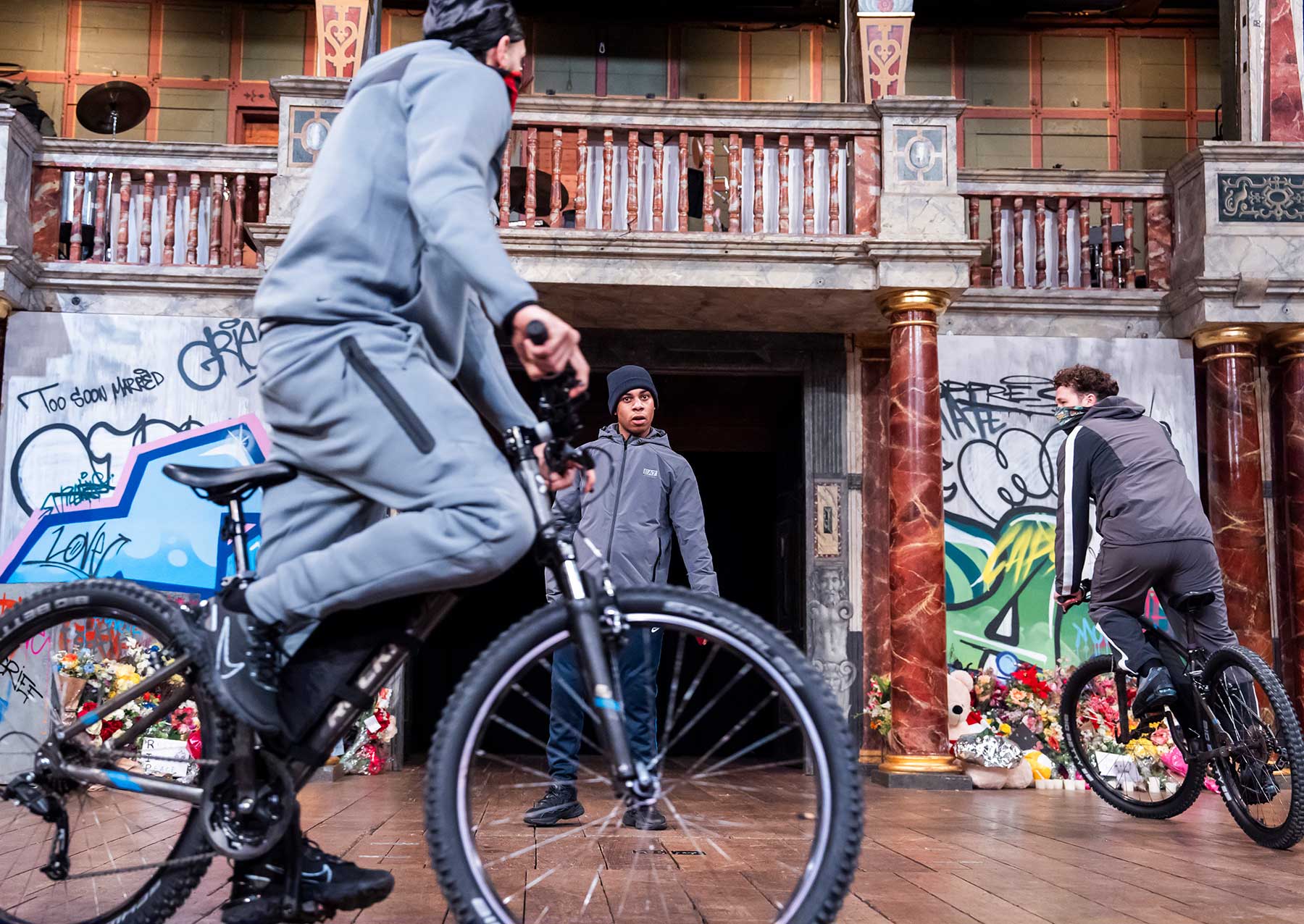
Romeo and Juliet by William Shakespeare is one of the most famous plays in the world, it’s a story that some people know without ever stepping into a theatre. In this 90-minute adaptation director, Lucy Cuthbertson applies a modern setting that could be easily seen in the streets of London today. The Globe, where Cuthbertson is the director of education, in partnership with the Violence Reduction Unit from the Mayor of London, share a combined goal of showcasing art as a learning tool to reduce violence. Not only producing the play but the project provides tickets for state schools and also workshops and training support for the teachers involved. After all, the best way to understand Shakespeare is by watching a production.
The play’s central theme of love is inseparable from violence. The violence of the families against each other mirrors the gang wars we see in the streets of London. And in that lies the importance of this play to these kids watching. They were everywhere on the pit, and in every level of the galleries. The challenge of producing Romeo and Juliet for a young audience in keeping their attention, entertaining, and sending the play’s message without letting them feel bored. That was a success, they cheered for love and gasped at the fight scenes. They were a brilliant audience that made the play even more enjoyable.
When I said the play could easily be seen in the streets of London I mean it, from the clothes the cast used, tracksuits, to bikers snatching phones and youths with bandanas covering their mouths. Flowers laid for the fallen and drums that created a constant undercurrent of tension. Stunt fights that looked very realistic and bicycle stunts, including a moment where a bike leapt several times over someone lying on the ground, a split second balancing beauty and danger. Part of the set design was created by students in a design competition, curated by the Olivier Award-winning designer of this production Natalie Pryce. Beautiful graffiti tags around the stage set the street tone of the play. The use of The Globe’s space posed no challenge for these veterans. The balcony scene for example, used the actual balcony and the pillars to create hiding points that made us feel like plants in the Capulet’s family garden, observers in this intimate scene.
The ensemble was brilliantly in sync with dances and truly listening to each other. My honourable mention goes to the leads, Felixe Forde who played Juliet and Hayden Mampasi who played Romeo. This duo took us on this wonderful journey, from the first sight while dancing in the party scene to their last breath. They had chemistry and brilliant comedic timing. Ah and by mentioning comedic timing I cannot leave Miriam Grace Edwards out, she played Juliet’s Nurse. From her first entrance in a green uniform, that once my eyes adjusted and I noticed the NHS symbol I was in stitches. Even under the laughter of the audience she projected that powerful voice and landed another joke. This trio could lead a play of their own. Juliet’s bed slides in during a scene transition and in a quick reveal we see Juliet and Romeo leaving the covers, the audience ‘wows’ at them and gasps as loud as the Nurse did when she entered seconds after.
After Juliet’s death first there was silence but then the audience exploded clapping. Only for the door to open and a group of people in white forensic suits to enter. And silence reigned once more, that effect really helped us digest the tragedy without leaping into the ecstasy of the bows. That was a masterpiece in directing. The shortened format keeps the story moving with the needed urgency
As mentioned, the importance of this play goes beyond the stage and educating a younger generation into Shakespeare, the real importance lies in using art to take them away from violent behaviour. If every night one of them left wanting to be a creative and choosing that path this production’s job is done. If another sees the peril of carrying a knife, then we are in a better world. Projects like this remind us how important representation is, when a young boy or girl sees themselves on stage they also see their own potential. We need better role models, even from Romeo & Juliet we can take the positives. Many theatres have educational branches, but Lucy Cuthbertson and her team excel. Well done team, keep on the good and important work.