


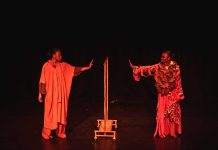







John Rwothomack had been waiting six years to bring his play FAR GONE to the London stage. It was finally hosted at the vibrant Brixton House and was well attended by a diverse and appreciative audience. Upon entering the space Rwothomack, through a sense of play and exuberance, fully embodied the central character Okumu. He welcomed the audience into the space – names and questions were asked – and invitation to join him on stage were offered or coerced. Okumu was playing a game of Whip Top, enjoying teasing and bantering with the apprehensive visitors.
A mobile with strips of material hanging from it was suspended above the intimate stage, with a sand-effect flooring created below it. The mobile conjured images of childhood, the whimsy of changing elements and ancestral omnipresence.
Whip Top put the audience at ease and coated the atmosphere in broad strokes of innocent wonder and joy. However, the Whip Top acted as a metaphor of the world spinning into chaos, as we were all about to witness.
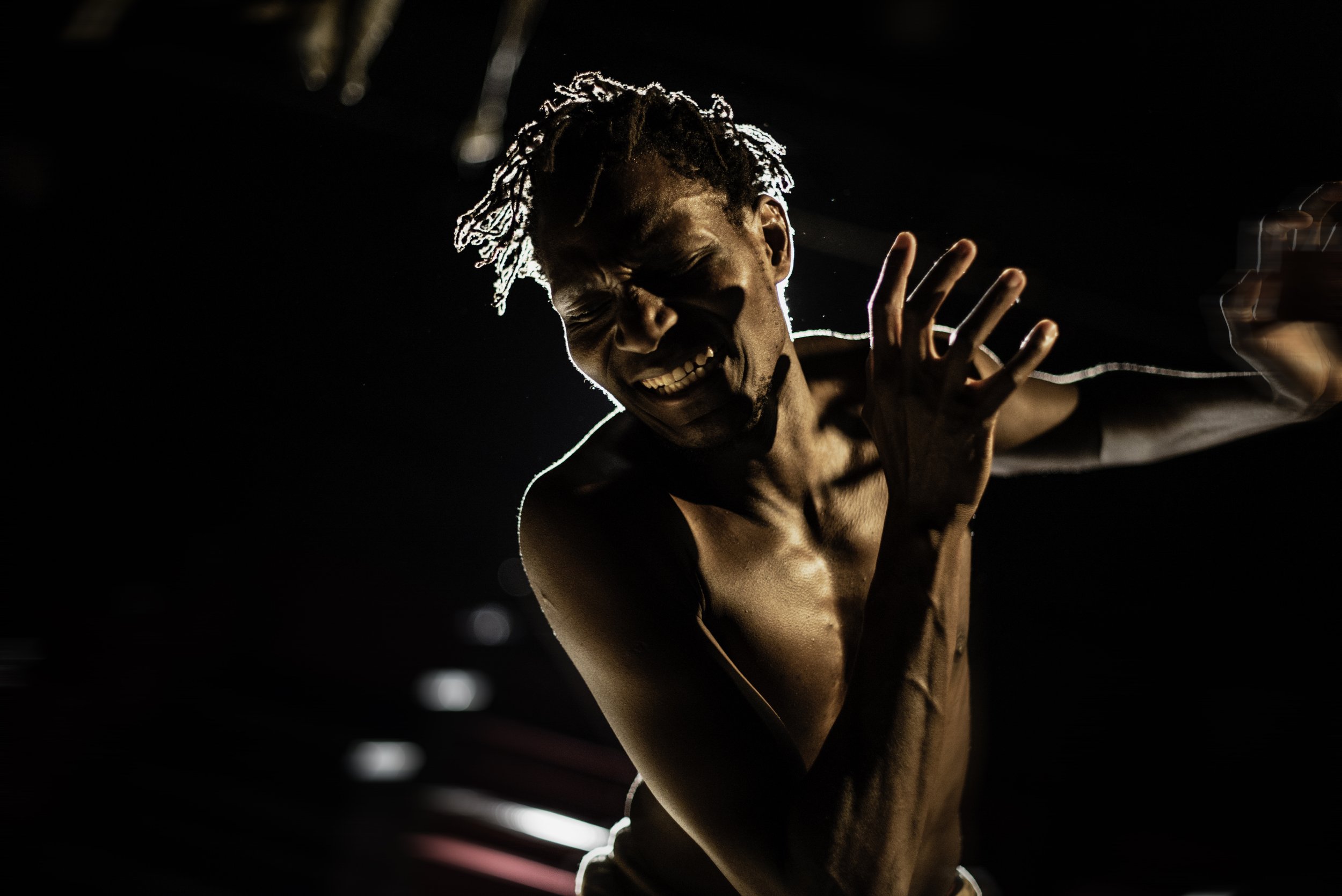
FAR GONE draws on the real life events of Rwothomack’s escape from the Lord’s Resistance Army (LRA) in Northern Uganda. The play depicts the loss of childhood, the brutality of war and the depraved acts of those who have lost their humanity. Through heightened physical theatre Rwothomack shifts from a young boy Okumu, his older brother Okello, the Commandant of the LRA, and Sprinkler – the Commandant’s groomed aide.
Through Lee Affen’s emotive soundscape and Will Monks’ provocative lighting we are taken on a journey from North Uganda to Southern Sudan. Okumu is like a weary pack horse transporting maize – his fate is sealed as he is transported to the LRA’s headquarters.
Okumu’s spiritual guide Okello helps him survive the unimaginable kidnapping and grooming he is forced to injure. Purposeful movement direction by Akeim Toussaint Buck and Lilac Yosiphon moves from gesture, movement, mime and caricature and highlights the tragic events that Okumu enacts.
From the beginning of the play the fourth wall was broken, we were told to support and engage with the Commandant’s demands. We the audience were compliant and complicit, repeating his heinous edicts. This device served the play well and reflected society’s indifference to genocide, war and corruption – society can often accept and acquiesce to the dominant ideology, regardless of any moral compass. The Commandant weaponises religion to snuff out acts of defiance – cutting down anyone who dared try to escape his training camp – if you go against God, you must be destroyed
Rwothomack is to be applauded; to have not only relived his trauma to write this play, but also to act in it and perform solo, is no mean feat. I question certain decisions made in the direction of Far Gone, those being: the childlike, high-pitched voice used to portray Okumu – this vocal choice often came across as comical and at certain times took me out of the world created. The duration of certain movement pieces could be explored and invested in further, The transitions from one character to another could find more range in quality and consistency. As a supporter of untold stories being brought to light, I do not mean to diminish the work, just offer my opinion as an invested audience member.
FAR GONE pays tribute and adds awareness to the child soldiers and families left behind, those stories of so many souls indoctrinated, hunted and massacred. FAR GONE has much to offer, it challenges us to speak truth to power and fight injustice especially in the times we now find ourselves in.