














We caught up with playwright Oladipo Agboluaje to talk all things Utopia Theatre’s Crown of Blood, his Yoruba adaptation of Shakespeare’s Macbeth which plays at Sheffield’s Crucible Theatre, 2-7 Feb before heading to the Belgrade Theatre in Coventry, 11-14 Feb 2026.
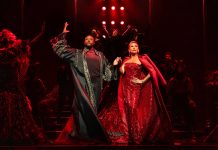
Crown of Blood is a powerful retelling of Shakespeare’s Macbeth set during the civil wars of 19th-century Yorubaland. General Aderemi, fresh from saving the kingdom from invaders is promoted to Field Marshal, thus fulfilling the prophecy of the oracle. When the oracle says he will become King, Aderemi (Deyemi Okanlawon) and his wife Oyebisi (Kehinde Bankole) go on a bloody mission to ensure he sits on the throne.
About Oladipo Agboluaje
Oladipo Agboluaje is a celebrated playwright, educator, and mentor whose work spans African and postcolonial theatre. Recipient of the Alfred Fagon Award, Peggy Ramsey Award, and Pearson Award, he has also held fellowships at Freie University and served as a Royal Literary Fund fellow. He was the 2018/19 writer-in-residence of the National Theatre.
His plays include Early Morning, Iyale – The First Wife, and adaptations of Mother Courage and The Hounding of David Oluwale. A seasoned teacher, he has guided students at Goldsmiths, SOAS, and Cambridge, shaping the next generation of theatre- makers. His work blends sharp political insight with lyrical storytelling, exploring identity, heritage, and the transformative power of performance.
In your own words, tell us about Crown of Blood and what attracted you to being part of this production.
When I returned to Nigeria in the 70s, my formative influences of Yoruba culture were the music of Sunny Ade, Ebenezer Obey, Kayode Fashola and Fela Kuti and the Yoruba language comedies and historical TV dramas. The first epic drama that blew me away was the televised version of Duro Ladipo’s Oba Koso, which is the story of Sango the Alaafin of Oyo who was later deified as the god of thunder. There’s a direct line between Ladipo’s play and Crown of Blood via plays like Ola Rotimi’s The Gods are not to Blame, Kurunmi and Ovonramwen Nogbaisi, Wole Soyinka’s Death and the King’s Horseman, Pedro Obaseki’s Obaseki and the dramas of Hubert Ogunde, Ade Love and Kola Ogunmola which originated from Yoruba travelling theatre. Ever since I became a playwright I wanted to write a period drama because of their work.
I had previously worked with director Mojisola Kareem, Utopia Theatre and The Crucible Theatre on Here’s What She Said to Me, and I was happy to rekindle our relationship. A bonus was working with talent from Nigeria in Deyemi Okanlawon, Kehinde Bankole, Toyin Oshinaike and Kayefi Osha. They are highly regarded in Nigeria and in the African diaspora through their work in film and TV and music. I’m proud that they are showcasing their talent in this production.
What did you enjoying about adapting a Shakespearean production?
Macbeth is arguably my favourite Shakespeare play. It’s themes and supernatural elements play comfortably within a Yoruba setting. I enjoy doing research into history. Samuel Johnson’s The History of the Yorubas was a major source. There are many features on Yoruba history and culture (and African history in general) on the internet. It’s great to see younger generations engaging with their heritage. Looking at how Macbeth and the story of Crown of Blood connect and where they diverge was an exciting venture to pursue.
We did two workshops where we invited experts in Yoruba culture to guide the development process. Writing is a lot about problem solving – what works and what doesn’t work, and then how to make things fit the story that one wants to tell and what themes to emphasize. And all of this is with an eye on performance – how to integrate dance, chanting, and song. Yoruba theatre is total theatre and so they are essential to the storytelling of Crown of Blood.
What did you find challenging about adapting Macbeth?
Crown of Blood follows the Macbeth storyline, but how the story pans out is influenced by the cultural and social context of its Yoruba setting. Deviations are explained within the culture rather than use the excuse of aligning the dramatic action with Shakespeare’s play. Writing, whether adapting or creating an original work, is an exercise in problem-solving: how does a character move from A to B? In what context could a man like Aderemi become Alaafin of Oyo? What if we replace the witches with an Ifa priest? How would that influence the concept of fate and destiny, especially if we add Esu, the deity of the uncertainty principle, to the mix? Then there was finding the contemporary resonance without forcing it into the story.
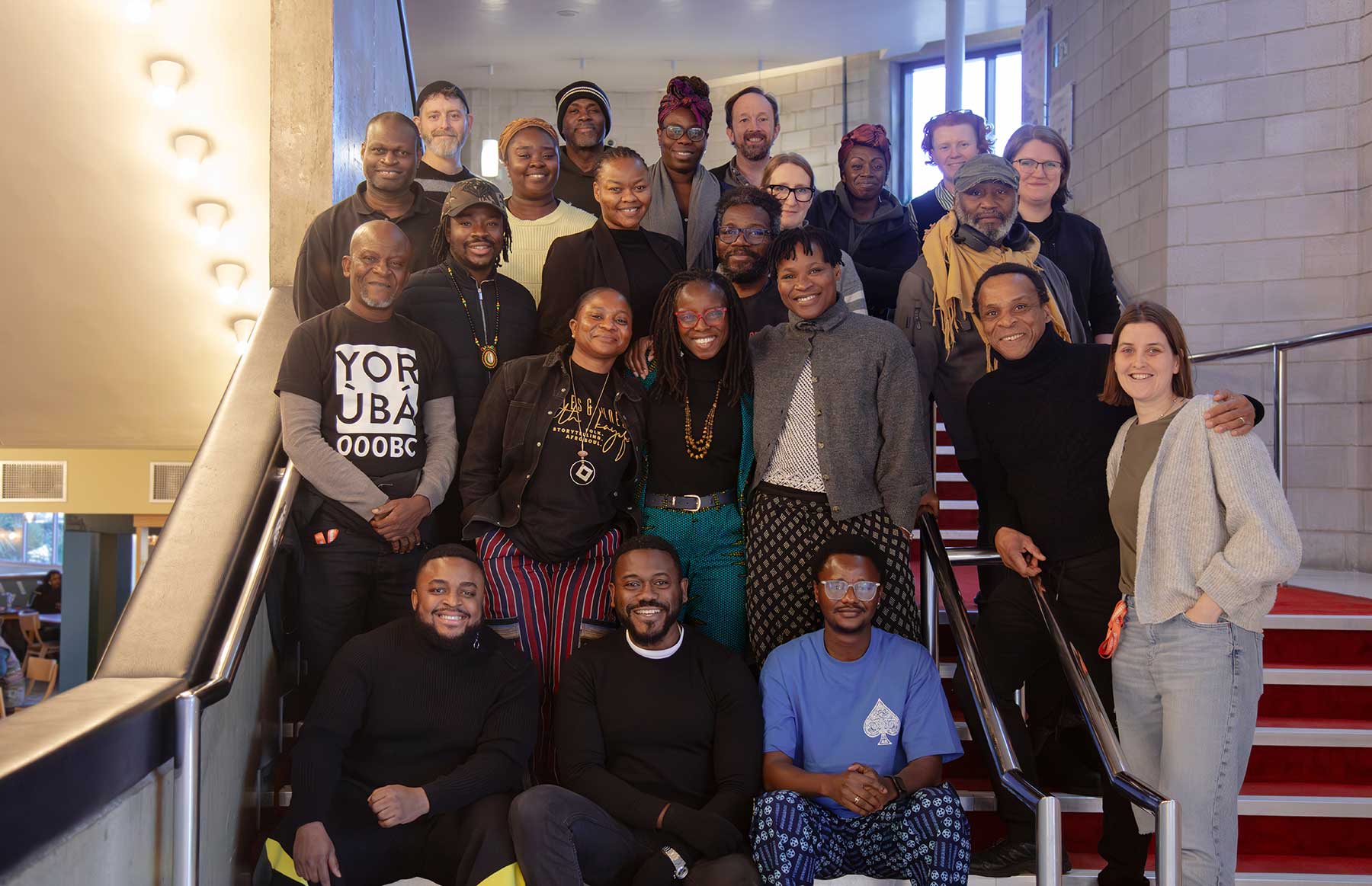
The process was made easier because we have the experience of Jude Akuwudike, Patrice Naiambana and Mo Sesay to draw upon in the workshops and in the production. Add Adura Onashile and Tunji Falana to the mix and you have a company that constantly questions the work with intelligence, passion and generosity. Mojisola (director) runs a democratic rehearsal room. Everyone’s opinion is valid.
Could you share some of the similarities that Crown of Blood shares with Macbeth and some aspects which are distinctive to your adaptation?
If you know how Macbeth ends up, you’ll be pleased to know that Aderemi shares his fate, and like Macbeth, Aderemi cannot see the wood for the trees. Oyebisi is Lady Macbeth on speed, and that’s even after she said no to drugs. A lot of people die, which is great for doubling up the cast. The witches’ prophecy is replaced with Ifa divination. Esu appears, along with the historical figures Moremi Ajasoro and Ogedengbe. There is one major distinction which Mojisola made me swear by Ogun, god of iron and war, not to reveal. She didn’t need to make me swear: Ibadan women are fierce, even when you rub them the right way.
What tips would you give to a newbie to this industry?
Theatre is collaborative. Work with people who share your vision and try to get your work on. There are a finite number of venues so putting your work on in a small venue is a massive achievement. Always be practical. Define your goals. Stay the course.
Quick Fire
Person you’d love to see at press night – dead, alive or fictional?
My mother.
The first time you went to the theatre – and who took you?
My first year at university, the Ekenwan campus theatre of the University of Benin (Great Ekenwites! Great Uniben!). It was a student production of Wole Soyinka’s Death and the King’s Horseman.
What was the last play you saw at the theatre?
Absent by Betool Khedairi and Penny Black, directed by Svetlana Dimcovic at Baron’s Court Theatre. It’s an adaptation of Khedairi’s novel set in Bagdad during the Iraq war. Sad, brutal and compassionate.
Shout out to the person in this industry who’s had the biggest impact on your career.
My voice would go hoarse, there are too many to mention. But I would say the late Biyi Bandele. He looked out for me when I wrote my first play. I miss him.
Finally, why should we come and see Crown of Blood?
It’s a night of total theatre. Esu said if you don’t go and see the show, he will pay you a visit.
Related links
- Kehinde Bankole (Oyebisi) and Deyemi Okanlawon (Aderemi) – interviews • Afridiziak Theatre News
- First Look at Utopia Theatre’s Crown of Blood at Sheffield Theatres • Afridiziak Theatre News
- Major ‘Nollywood’ stars headline cast of Utopia & Sheffield Theatre’s Crown of Blood and full cast announced • Afridiziak Theatre News
- Read our New Nigerians interview with Oladipo Agboluaje